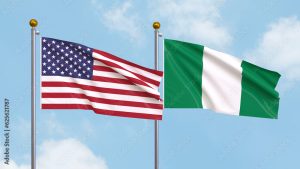
Many Nigerians today are experiencing increasing difficulty obtaining a U.S. visitor visa. Countless genuine travelers simply want to visit for holidays, attend events, or establish business contacts. However, Nigeria is currently among the countries facing significant U.S. visa restrictions. As a result, anyone wishing to travel from Nigeria to the United States may need to apply almost a year in advance just to secure an interview date at the U.S. embassy in Nigeria. And even after finally securing an interview, approval is far from guaranteed, regardless of the applicant’s legitimate purpose or strong ties to Nigeria.
In the past, the U.S. Embassy issued multiple-entry visas to Nigerians, sometimes valid for up to five years. That era has largely passed. Some individuals have even had valid visas cancelled, an experience that appears to have included the Nobel Laureate, Professor Wole Soyinka. Although he later stated that he requested the cancellation, what is clear is that the visa was ultimately revoked. Nigeria was also once part of the U.S. Visa Lottery program, but it has since been removed from the list of eligible countries.
During former President Donald Trump’s first term, many Nigerian public figures, such as Professor Wole Soyinka and other respected voices, openly expressed negative views about him. Many aligned themselves with liberal American circles, especially in places like San Francisco, and adopted similar criticisms of Trump. The rhetoric intensified after he won a second term. I recall watching Nigerian journalists and scholars on YouTube, including Professor Bolaji Akinyemi, making harsh remarks about the president and the policies he announced during his inauguration.
A significant number of Nigeria’s opinion leaders rely heavily on Western media outlets, particularly CNN and other large networks that have consistently opposed Trump. Some Nigerians have embraced these narratives, often without being able to clearly explain their dislike for him. Even some Nigerians living in the United States joined in spreading negative claims, suggesting that President Trump intended to deport all immigrants or send everyone back home. Others assumed that opposing Trump was an automatic political position for Black people. Unfortunately, these attitudes, echoed publicly, may have contributed to Nigeria’s strained perception within the U.S. government.
Like him or not, Donald Trump is the legitimate president of the United States, and many Americans believe he is doing what he considers best for his country. His deep patriotic sentiment, reflected in the song “I’m Proud to Be an American”, is evident in his policies. Over the past ten months, since he returned to office, he has focused on reversing policies he believes harmed the nation. Much of the world has gone “woke,” losing touch with basic truths, to the point where a Supreme Court justice publicly said she could not define what a woman is. Many lives have suffered under confused ideologies promoted globally since the days of the Obama government. In such a climate, Trump has insisted on what he calls “common sense policies,” and many nations are now reconsidering their stance on these issues.
What surprises me is that despite the many pressing challenges within Nigeria, some Nigerians seem more concerned with criticizing the American president. Some call him a liar, yet we witnessed a Nigerian federal minister publicly insult a service man and deny it the next day, an incident that attracted little outrage. A serious nation would have requested for resignation of such an indecent public officer. Under President Buhari’s eight years of leadership, Nigeria suffered greatly, with terrorists protected at various times even as they worked to advance a vision of an Islamic state.
Perhaps this is part of why the U.S. government wants Nigerians to remain in their country. If many Nigerians publicly insist that their own leaders are better than the American president, why should the U.S. welcome more people into its already polarized climate? The last decade of American politics has seen extreme division, especially since Trump’s 2016 election. The polarization has deeply affected ordinary Americans and placed tremendous pressure on the president himself. With such internal tensions, the administration may hesitate to open the door wider to more immigrants who might add to the complexity.
A second possible reason for these visa restrictions is the influence of American bureaucrats, often described as the “deep state”, who fiercely oppose Trump. They sometimes act in ways that create the impression that the Trump administration is hostile to certain groups, including Nigerians. While the president sets foreign policy, not everything done in his name truly reflects his personal intentions.
Nigerian opinion leaders should focus more on serious challenges at home, for example, the recent allegations of sexual harassment involving our Senate President, including accusations from a woman senator. These issues demand urgent attention from our leaders. Rather than sowing discord between Nigeria and the United States, we should consider the broader diplomatic picture. Maintaining healthy relations with America can serve Nigeria’s interests. At a time when global alliances matter, it is wise for Nigeria to preserve, even strengthen, its diplomatic ties with the U.S.
God bless Nigeria, and may God bless the United States of America.
Michael Jolayemi is the Author of:
- Saving America: The war we can’t ignore
- Sheltered Through the Storm: The Travails and Ultimate Triumph of the Church
- The Mysteries of God, the Origin We Don’t Know, the Eternity We Should Believe
- Watch out for his next book – Defying Death – How to Live and Not Die